
Defining the Three “Angelfish” Lineages & The “Anglerfish”
 1. Anglefish
To navigate this guide effectively, we must first separate the primary groups that share these names:
| Fish Group | Environment | Scientific Classification | Distinct Visual Feature |
| Freshwater Angelfish | South American Rivers | Cichlidae family (Pterophyllum spp.) | Disc-shaped body, long trailing fins |
| Marine Angelfish | Tropical Coral Reefs | Pomacanthidae family | Vibrant colors, sharp preopercular spines |
| Mono “Angelfish” | Brackish Estuaries | Monodactylidae family (Monodactylus spp.) | Diamond-shaped, silvery bodies |
| Anglerfish (The “Angle” Fish) | Deep Ocean / Seafloor | Lophiiformes order | Bioluminescent lure (esca) on the head |
 2. Habitats & Geographic Distribution
Because these groups are distinct, their geographic ranges span across entirely different global biomes:
Freshwater Angelfish (Pterophyllum)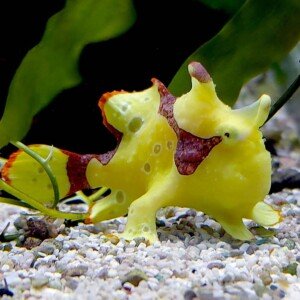
Native exclusively to tropical South America, these fish are widely distributed across the Amazon, Orinoco, and Essequibo river basins. They thrive in “igapós” (flooded forests) and slow-moving, dimly lit blackwater tributaries. They prefer warm, soft, and slightly acidic waters where submerged roots and dense aquatic vegetation allow them to hide.
Marine Angelfish (Pomacanthidae)
These are colorful, saltwater residents found throughout the tropical shallows of the Atlantic, Indian, and western Pacific Oceans. They live exclusively around structurally complex coral reefs, utilizing caves, overhangs, and crevice networks from shallow lagoons down to depths of over 50 meters.
Brackish Mono “Angelfish” (Monodactylus argenteus)
Commonly known as the Silver Moony or Mono Angel, these fish inhabit the Indo-West Pacific. They are uniquely adapted to fluctuating salinities, moving fluidly between mangrove estuaries, tidal creeks, and the lower reaches of freshwater streams.
The Deep-Sea Anglerfish (Lophiiformes) 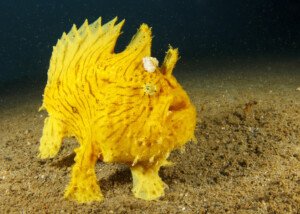
If your search was directed at the deep-sea predator, their distribution is truly global, spanning from tropical to polar waters. While shallow species like frogfishes inhabit reefs down to 100 meters, the classic deep-sea pelagic forms wander the midnight zone of the open ocean, typically floating between $200\text{ and }2,000\text{ meters}$ deep in complete darkness.
 3. Habits, Behavior & The “Angler” Mechanism
Social Structures
-
Freshwater & Mono Angels: Both groups exhibit schooling behavior. In mangrove or river ecosystems, they form tight-knit groups to confuse larger predators. Freshwater angelfish are notoriously territorial during breeding cycles, forming monogamous pairs that aggressively guard their eggs.
-
Marine Angels: Typically solitary or found in harems (one dominant male protecting a small group of females). They are highly diurnal, actively grazing the reef by day and wedging themselves into tight rock crevices at night to sleep.
The True “Angler” Mechanism 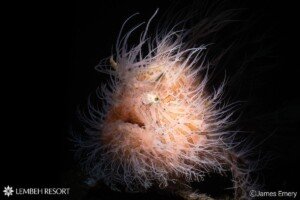
The phonetic tie between Angelfish and Anglerfish comes from the highly specialized hunting anatomy of the order Lophiiformes.
Instead of actively chasing prey, deep-sea anglerfish utilize an incredibly sophisticated ambush system:
-
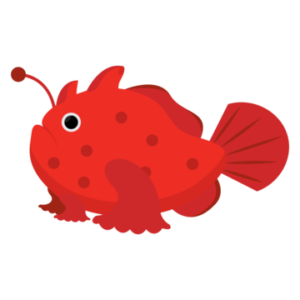
The Illicium: A highly modified dorsal fin spine that functions exactly like a fishing rod, extended over the fish’s massive head.
-
The Esca: A club-like bait structure at the tip of the rod. In deep-sea species, the esca houses symbiotic, bioluminescent bacteria that glow brightly in pitch-black waters to attract curious prey.
 4. Diet, Hunting & Feeding Habits
-
Freshwater Angelfish: Their laterally compressed (flat) bodies allow them to glide effortlessly through vertical reeds. They look like a dead leaf, allowing them to sneak up on aquatic insects, small crustaceans, and tiny fish fry.
-
Marine Angelfish: They possess highly specialized jaws capable of eating organisms most other fish avoid. Many species feed almost exclusively on tough, fibrous marine sponges, macroalgae, and coral polyps.
-
Deep-Sea Anglerfish: Because food is exceedingly scarce in the deep ocean, their feeding strategy is purely opportunistic. When a fish or crustacean approaches the glowing esca, the anglerfish snaps its flexible, protruding jaws open. This rapid mouth expansion generates a powerful vacuum, pulling the prey directly inside. Their long, needle-like teeth point inward, making escape impossible and allowing them to swallow animals larger than themselves.
 5. Predators & Ecological Threats
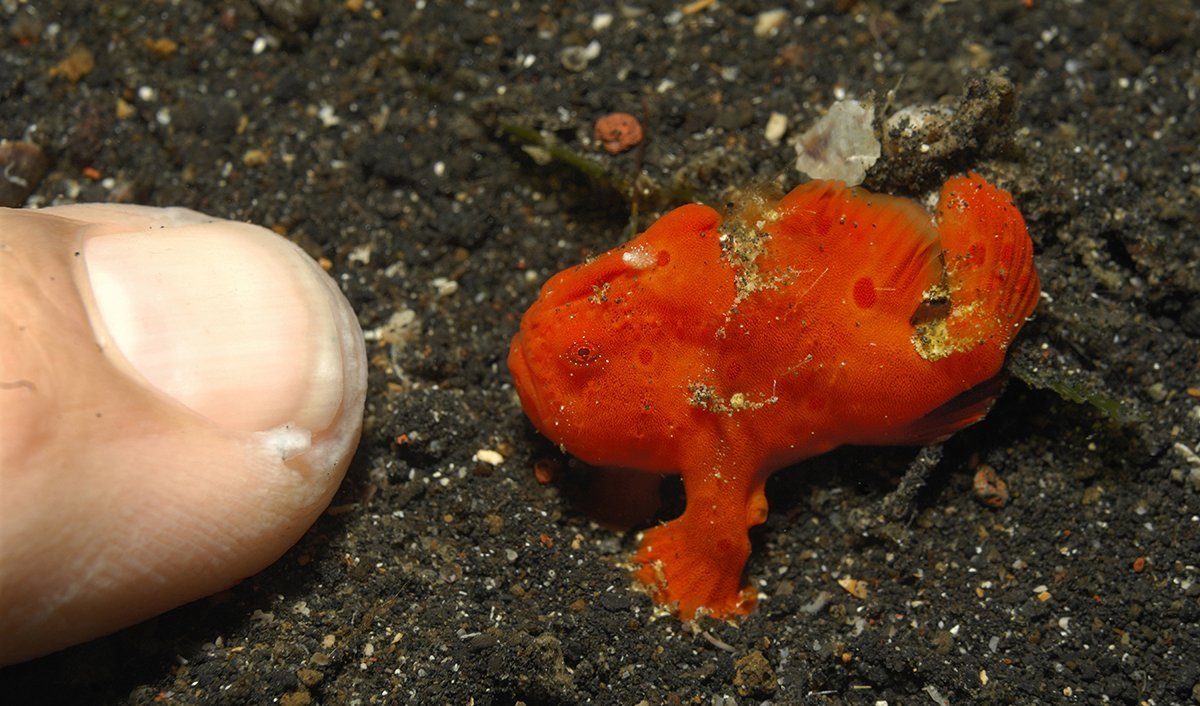
Adult frogfish have very few natural predators due to their exceptional camouflage and defensive tactics. However, when spotted or flushed out, they are occasionally hunted by lazardfish, scopionfish and other larger scopionfish.
Predators of Angelfish (Shallow Water)
In river systems and coral reefs, visibility is high and predators are abundant.
-
Freshwater varieties fall prey to large cichlids, piranhas, wild cats, and wading birds like herons.
-
Marine varieties are actively hunted by larger reef predators, including groupers, barracudas, moray eels, and reef sharks.
Predators of Anglerfish (Deep Sea)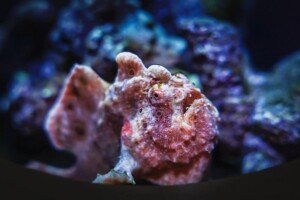
Deep-sea anglerfish have very few natural predators due to their extreme camouflage (many are pitch black or deep red to blend into the darkness) and the sheer isolation of the bathypelagic zone. However, they are occasionally consumed by massive deep-diving sharks or large bottom-dwelling (demersal) fishes.
Anthropogenic & Ecological Threats
-
Climate Change & Acidification: Rising water temperatures and ocean acidification trigger coral bleaching, systematically wiping out the habitats and food sources of marine angelfish.
-
The Aquarium Trade: Unregulated, destructive wild-catching practices (such as using cyanide fishing on coral reefs) heavily threaten localized populations of rare marine angelfish.
-
Deep-Sea Environmental Disruption: Deep-sea anglerfish are increasingly threatened by commercial bottom-trawling operations, plastic pollution sinking to the ocean floor, and the emerging footprint of deep-sea mining exploration.
-
 Species Diversity
Frogfish display incredible species diversity, with roughly 50 to 60 known species across 15 genera belonging to the family Antennariidae. They are famous for their remarkable camouflage, ability to walk on the seafloor using arm-like fins, and their specialized “fishing rod” lure (illicium) used to catch prey
 7.Breeding and Reproduction
Notable Freshwater Species 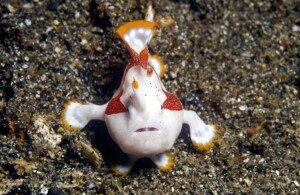
-
Common Angelfish (Pterophyllum scalare): The staple of the aquarium hobby, highly adaptable with dozens of captive-bred color morphs.
-
Altum Angelfish (Pterophyllum altum): The largest of the genus, featuring highly pronounced, tall vertical fins and distinct brown-red bars.
Notable Marine Species
-
Emperor Angelfish (Pomacanthus imperator): Renowned for its dramatic transformation; juveniles are dark blue with electric white rings, while adults transition to bold horizontal yellow and blue stripes.
-
Queen Angelfish (Holacanthus ciliaris): A stunning iridescent blue and yellow species recognizable by a dark, crown-like spot on its forehead.
Notable Anglerfish Species
-
Humpback Anglerfish (Melanocetus johnsonii): The textbook, spherical deep-sea species featuring an enormous mouth and a prominent bioluminescent lure.
-
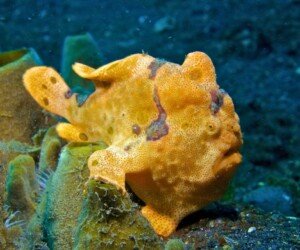
Frogfishes (Antennariidae): Shallow-water anglerfish that have adapted their pectoral fins to mimic legs, allowing them to literally “walk” across the seafloor and coral heads while camouflaged perfectly as sea sponges.

