Deep Diver Specialtey Course
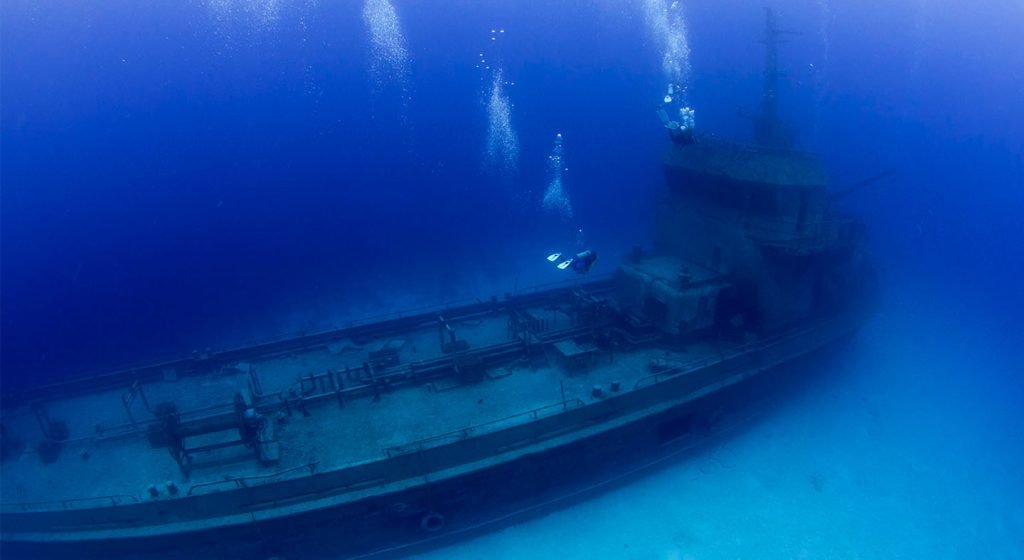
Venturing deeper into the ocean is one of the most exhilarating progressions you can make as a scuba diver. It opens up completely different marine ecosystems, deep-water wrecks, and geological formations that shallow divers never get to see.
The recreational Deep Diver Specialty Course is specifically designed to give you the skills, knowledge, and confidence to safely push your limits beyond the standard open-water boundaries.
1. Most Recognized Scuba Organization
When it comes to global recognition, PADI (Professional Association of Diving Instructors) is undisputedly the largest and most widely recognized scuba training organization in the world.
-
The PADI Standard: A PADI certification card is accepted at virtually any dive center on the planet.
-
Other Major Agencies: SSI (Scuba Schools International) and NAUI (National Association of Underwater Instructors) are also highly respected, world-renowned organizations that offer nearly identical deep diving specialty curriculums.
2. Course Duration & Prerequisites
The Deep Diver course is highly efficient and designed to be completed over a single weekend.
-
Time Commitment: Typically 2 days (excluding prior independent study).
-
The Layout: You will complete roughly 4 to 6 hours of independent e-learning at your own pace, followed by 4 open water training dives spread across two days.
-
Prerequisite: You must already hold an Advanced Open Water Diver certification (or equivalent) and be at least 15 years old.
3. What’s Involved in the Course?
The course bridges the gap between basic dive theory and the physical realities of deep water. It splits your time between academics and practical in-water skills.
Academic Focus
-
The physics and physiology of deep diving (how pressure affects your body and your breathing gas).
-
Managing your air consumption (you breathe gas much faster at depth!).
-
Understanding and preventing decompression sickness.
In-Water Skills
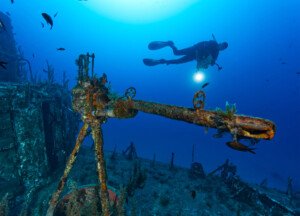
During your 4 training dives—which will progressively take you down to a maximum recreational limit of 40 meters (130 feet)—you will practice:
-
The “Narcosis Test”: Performing simple math or navigation tasks on the surface vs. at 100+ feet to personally experience how nitrogen narcosis affects your mental processing.
-
Emergency Air Management: Practicing navigating to a simulated “emergency spare air tank” stationed on the anchor line.
-
Deep Navigation: Managing navigation when colors fade and light diminishes.
-
Descent & Ascent Lines: Using lines to safely manage your positioning and depth changes.
4. Equipment Needed
In addition to your standard scuba kit (BCD, regulator, mask, fins, and snorkel), deep diving requires a few specialized pieces of safety gear:
-
Dive Computer: A mandatory requirement. You must know your exact depth and “No-Decompression Limit” (NDL) in real-time.
-
Primary Underwater Torch (Light): Water filters light sequentially. By the time you reach 30 meters (100 feet), vibrant reds and oranges disappear into dull grays and blues. A good light brings those colors back.
-
Surface Signaling Devices: A surface marker buoy (SMB) and a whistle are vital in case you drift away from the boat during a deep ascent.
-
Secondary/Backup Tracking: A physical slate and pencil for calculating contingency plans, and a backup depth gauge or timer.
5. Planning the Dives
Planning a deep dive is drastically more disciplined than a shallow reef dive. In this course, you will learn the “Rule of Thirds” for gas management (one-third of your air for the dive, one-third for the return/ascent, and one-third held in reserve for emergencies).
Essential Planning Variables: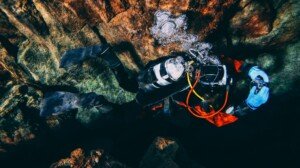
-
No-Decompression Limits (NDL): Deep dives dramatically shorten the time you can stay at the bottom without needing formal decompression stops.
-
Ascent Rates: You will practice strict speed control—never ascending faster than 9 meters (30 feet) per minute.
-
Safety Stops: You will master executing a mandatory 3 to 5-minute safety stop at 5 meters (15 feet) to safely off-gas nitrogen before surfacing.
6. Risks Involved
Deep diving is incredibly safe when rules are followed, but the margin for error shrinks as depth increases. The course explicitly trains you to mitigate these specific risks:
-
Nitrogen Narcosis: Often called the “rapture of the deep,” high-pressure nitrogen acts as a mild anesthetic. It can cause a feeling of euphoria, delayed reflexes, or poor judgment. It is entirely reversible simply by ascending a few meters.
-
Decompression Sickness (DCS): Commonly known as “the bends.” Absorbing too much nitrogen and ascending too fast can cause bubbles to form in your tissues or bloodstream.
-
Rapid Gas Consumption: Because the air you breathe is highly compressed at depth, a tank that lasts an hour at the surface might only last 15–20 minutes at 40 meters.
-
Environmental Changes: Deep water is frequently subject to thermoclines (sudden drops in water temperature), reduced visibility, and stronger shifting currents.

