
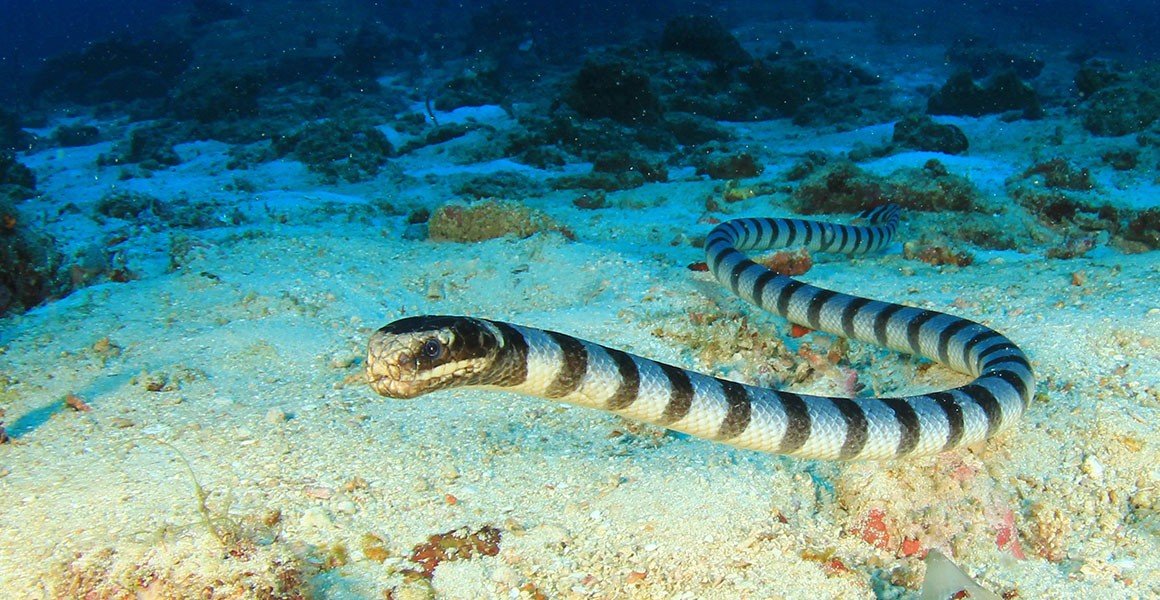
Sea Snakes
Sea snakes are some of the most specialized reptiles on the planet, having fully adapted to a life spent almost entirely underwater. Found primarily in the warm tropical waters of the Indian and Pacific Oceans, they belong to the family Elapidae (the same family as cobras and mambas).
🐍 Habits and Behavior
Sea snakes are generally diurnal (active during the day), though some species hunt at night.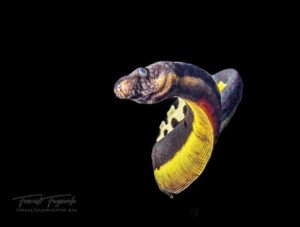
-
Diving: While they have specialized lungs that run almost the length of their body, they must surface to breathe air. Most can stay submerged for 30 minutes to 2 hours at a time.
-
Skin Breathing: Fascinatingly, they can absorb up to 25% of their oxygen through their skin, which aids in their long dives.
-
Movement: On land, most sea snakes are clumsy and helpless because they lack the wide belly scales that land snakes use for traction. In the water, their paddle-shaped tails make them incredibly efficient swimmers.
🥚 Breeding and Reproduction
There are two main groups of sea snakes with very different reproductive strategies: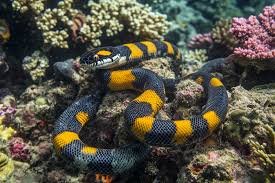
-
Ovoviviparous (Most Sea Snakes): About 80% of species give birth to live young at sea. The eggs develop and hatch inside the mother’s body so she never has to leave the water.
-
Oviparous (Sea Kraits): Members of the genus Laticauda are amphibious. They must return to land to lay their eggs in rock crevices or caves.
🐍 Hatchlings
-
Independence: Young sea snakes are born or hatched fully functional. They are independent from birth and receive no parental care.
-
Size: Hatchlings are typically large relative to their mothers, often measuring about 1/3 to 1/2 of the adult’s length, which gives them a better chance of escaping predators like sharks and large fish.
🐟 Diet and Hunting
Sea snakes are carnivorous predators with highly potent venom used to quickly paralyze prey in the water.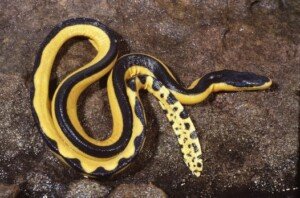
-
Primary Food: They mostly eat small fish, eels, and fish eggs. * Hunting Style: They often poke their heads into coral crevices or burrows to flush out prey. Some species are specialists; for example, the Turtle-headed sea snake eats only fish eggs.
⏳ Lifespan
Determining the exact lifespan of sea snakes in the wild is difficult, but estimates suggest:
-
Average Lifespan: Most species live between 7 to 10 years.
-
Captivity: They generally do not fare well in captivity due to specialized diet and environmental needs, often living much shorter lives in tanks than in the wild.
Note on Venom: While sea snakes are among the most venomous animals in the world, they are generally docile and rarely bite humans unless they feel severely threatened or are handled roughly.

